Electric vehicles (EVs) are redefining efficiency—and one of the most impactful technologies behind this shift is regenerative braking. But how useful is it in real-world driving? Let’s break it down from both a technical and buyer perspective.
What Is Regenerative Braking?
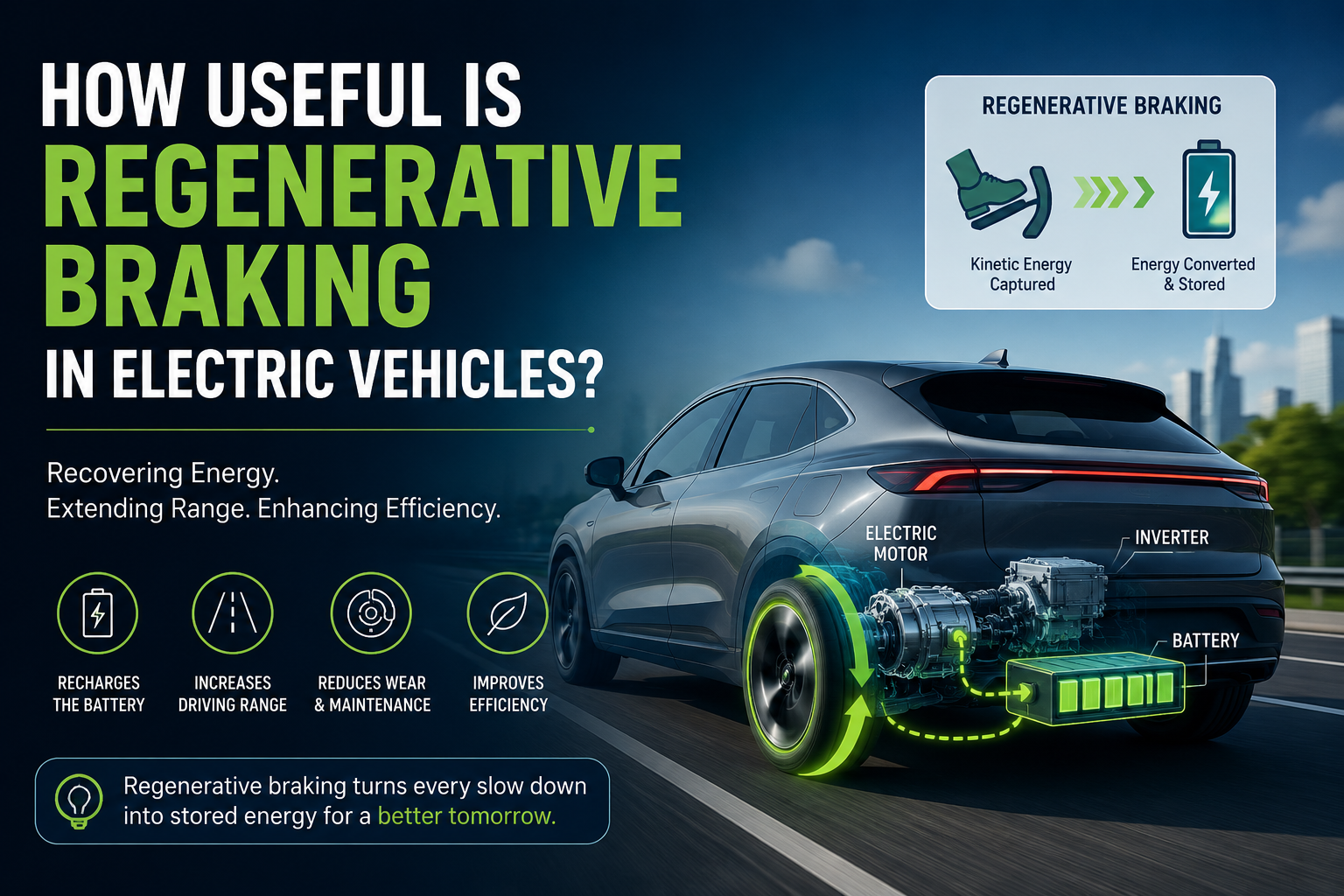
Regenerative braking is a system that recovers energy during deceleration. Instead of wasting kinetic energy as heat (like in conventional braking), EVs convert it back into electrical energy and store it in the battery.
In simple terms:
Slow down → generate electricity → recharge battery
How Does It Work?
When you press the brake pedal or lift off the accelerator:
- The electric motor runs in reverse (acts as a generator)
- Kinetic energy from the wheels is converted into electrical energy
- This energy is fed back into the battery
This reduces reliance on mechanical brakes and improves overall efficiency.
Real-World Benefits of Regenerative Braking
1. Increased Driving Range (5%–25%)
Regenerative braking can recover a meaningful portion of energy, especially in city driving with frequent stop-and-go traffic.
- Urban conditions: Up to 20–25% range improvement
- Highway driving: Lower impact (~5–10%)
👉 For fleet operators and daily commuters, this directly translates into fewer charging cycles and lower operating costs.
2. Reduced Brake Wear (Up to 50%+)
Because the motor assists in slowing down:
- Less usage of brake pads and discs
- Reduced maintenance costs
- Longer service intervals
👉 Particularly valuable in commercial EVs like 3-wheelers, delivery vans, and industrial vehicles.
3. Improved Energy Efficiency
Regenerative braking improves the overall system efficiency of EVs by minimizing energy loss.
- Conventional braking: Energy lost as heat
- Regenerative braking: Energy reused
👉 This contributes to higher km/kWh performance metrics, a key buying factor.
4. Better Driving Experience (One-Pedal Driving)
Many EVs offer one-pedal driving, where lifting the accelerator slows the vehicle significantly.
- Less driver fatigue
- Smoother driving in traffic
- Enhanced control on slopes
5. Environmental Impact
By improving efficiency:
- Lower electricity consumption
- Reduced demand on power generation
- Lower lifecycle emissions
Limitations You Should Know
Regenerative braking isn’t “free energy”—it has practical limits:
❌ Not Effective at Full Battery
When the battery is fully charged, it cannot accept more energy → regen is reduced or disabled.
❌ Limited at Low Speeds
At very low speeds, mechanical brakes still take over.
❌ Energy Recovery Isn’t 100%
Typical efficiency: 60–70% energy recovery (rest lost due to system inefficiencies)
Where Regenerative Braking Delivers Maximum Value
| Application | Usefulness |
| City EVs (2W/3W/4W) | ⭐⭐⭐⭐⭐ |
| Delivery & Logistics Fleets | ⭐⭐⭐⭐⭐ |
| Industrial EVs | ⭐⭐⭐⭐ |
| Highway Driving | ⭐⭐⭐ |
👉 The more frequent braking cycles, the higher the benefit.
Future Advancements
Modern EV systems are improving regenerative braking with:
- AI-based braking optimization
- Integration with ADAS systems
- Multi-level regenerative control (driver selectable modes)
- Enhanced motor-controller efficiency
Companies focusing on integrated powertrain systems are pushing regen efficiency even further.
Final Verdict: How Useful Is It?
Highly useful—especially in real-world urban conditions.
Regenerative braking is not just a feature; it’s a core efficiency driver in EVs that delivers:
- Better range
- Lower maintenance
- Improved driving comfort
- Reduced operating cost
👉 For buyers and fleet operators, it’s a hidden ROI multiplier that directly impacts total cost of ownership (TCO).
Explore EV Powertrain Products