Choosing the right electric motor is critical for efficiency, reliability, operating cost, and long-term performance in any industrial setup. With options ranging from traditional AC induction motors to advanced BLDC and PMSM motors, decision-makers often ask:
Which motor technology is best for my industrial application?
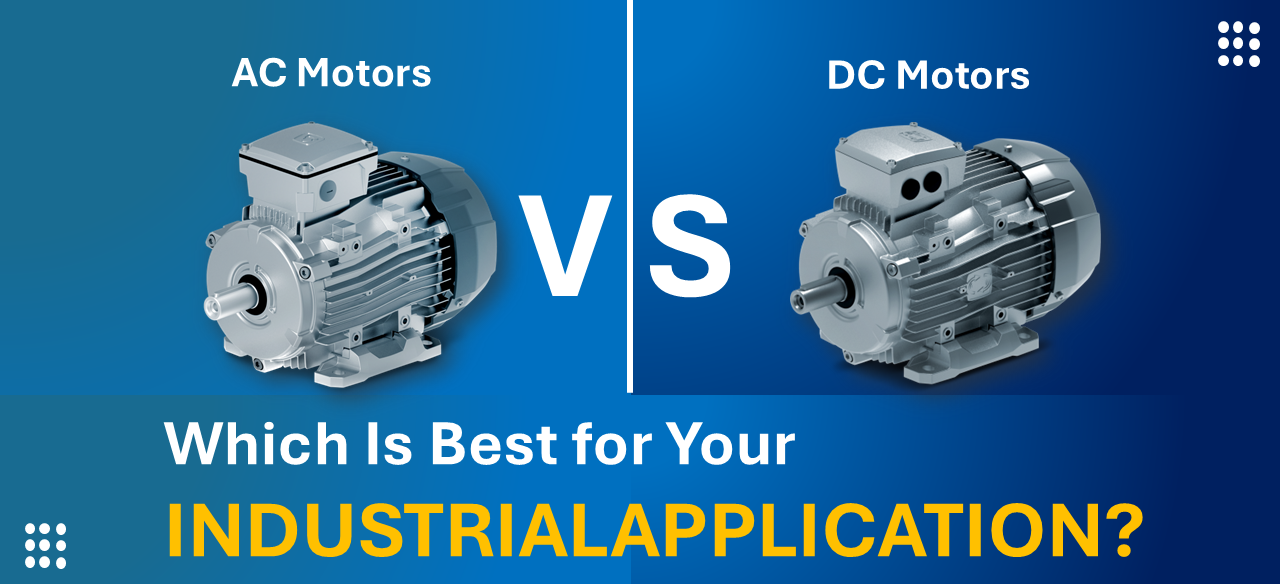
In this blog, we compare AC Induction Motors, DC Motors, BLDC Motors, and PMSM Motors, highlighting their working principles, advantages, limitations, and ideal use cases — helping you make an informed choice.
Why Motor Selection Matters in Industry
A motor is not just a component — it is the heart of industrial machinery. The wrong selection can result in:
- Higher energy consumption
- Frequent breakdowns
- Increased maintenance costs
- Reduced productivity
At Rotomotive Powerdrives India Ltd, we design and supply motors and gear solutions that are optimized for real industrial conditions, ensuring maximum uptime and efficiency.
Overview of Motor Types
| Motor Type | Power Supply | Control Complexity | Efficiency | Typical Use |
| AC Induction Motor | AC | Low–Medium | Good–Very Good | General industry |
| DC Motor | DC | Medium | Moderate | Variable speed applications |
| BLDC Motor | DC (Electronic Commutation) | High | Very High | Automation, EVs |
| PMSM Motor | AC with Drive | High | Excellent | High-efficiency, Energy Critical Operations, EVs |
1. AC Induction Motors – The Industrial Workhorse
How It Works
AC induction motors operate using electromagnetic induction, where the rotor rotates due to the magnetic field generated by the stator.
Key Advantages
✔ Rugged and reliable design
✔ Low initial cost
✔ Minimal maintenance
✔ Suitable for harsh industrial environments
✔ Wide power range availability
Limitations
✖ Lower efficiency compared to BLDC & PMSM
✖ Speed control requires VFD
✖ Not ideal for high-precision control
Ideal Industrial Applications
- Conveyors
- Pumps & compressors
- Fans & blowers
- Mixers & crushers
- General manufacturing machinery
Rotomotive Advantage:
Rotomotive offers IE2, IE3, IE4 energy-efficient induction motors, ensuring compliance with modern energy norms while maintaining robust performance.
2. DC Motors – Flexible Speed Control
How It Works
DC motors use direct current to generate torque, making speed control relatively simple.
Key Advantages
✔ Excellent speed control
✔ High starting torque
✔ Simple control in low-power applications
Limitations
✖ Brushes and commutators require maintenance
✖ Lower lifespan compared to AC motors
✖ Less suitable for dusty or explosive environments
Ideal Industrial Applications
- Cranes & hoists
- Elevators
- Rolling mills
- Battery-operated systems
Industry Trend:
Traditional DC motors are gradually being replaced by BLDC and PMSM motors due to maintenance and efficiency concerns.
3. BLDC Motors – High Efficiency, Low Maintenance
How It Works
Brushless DC motors use electronic commutation instead of brushes, controlled by an inverter or controller.
Key Advantages
✔ Very high efficiency
✔ No brushes → low maintenance
✔ Compact and lightweight
✔ Excellent speed control
✔ Long service life
Limitations
✖ Higher initial cost
✖ Requires electronic controller
✖ Sensitive to voltage and control quality
Ideal Industrial Applications
- Automation systems
- Robotics
- HVAC systems
- Medical equipment
- Electric vehicles (EVs)
Rotomotive Expertise:
Rotomotive’s advanced motor solutions support modern automation and electrification demands, making BLDC motors ideal for next-generation applications.
4. PMSM Motors – Precision & Performance Redefined
How It Works
Permanent Magnet Synchronous Motors use permanent magnets on the rotor, eliminating rotor losses and synchronizing speed with supply frequency.
Key Advantages
✔ Highest efficiency among motor types
✔ Excellent torque density
✔ Precise speed & position control
✔ Reduced energy consumption
✔ Compact design
Limitations
✖ Higher cost due to rare-earth magnets
✖ Requires sophisticated drive control
✖ Application-specific design needed
Ideal Industrial Applications
- CNC machines
- Robotics & servo systems
- EV drive trains
- High-precision automation
- Energy-critical operations
Future-Ready Choice:
PMSM motors are rapidly becoming the preferred choice for high-efficiency and EV applications.
Quick Comparison: Which Motor Should You Choose?
| Requirement | Best Motor Choice |
| Rugged, cost-effective operation | AC Induction Motor |
| High starting torque | DC Motor |
| Energy efficiency & low maintenance | BLDC Motor |
| Maximum efficiency for Energy Critical Operations | PMSM Motor |
Final Thoughts: Making the Right Choice
There is no one-size-fits-all motor. The best motor depends on:
- Load characteristics
- Speed control requirements
- Operating environment
- Energy efficiency goals
- Budget and lifecycle cost
At Rotomotive, we don’t just sell motors — we deliver engineered drive solutions that maximize efficiency, eliminate avoidable downtime, and generate measurable performance gains tailored to your application
Need Expert Guidance?
Whether you need standard induction motors, custom-built solutions, or advanced motor technologies, our engineering team is ready to assist.
👉 Explore our solutions: www.rotomotive.com
👉 Contact our experts for application-specific motor selection.